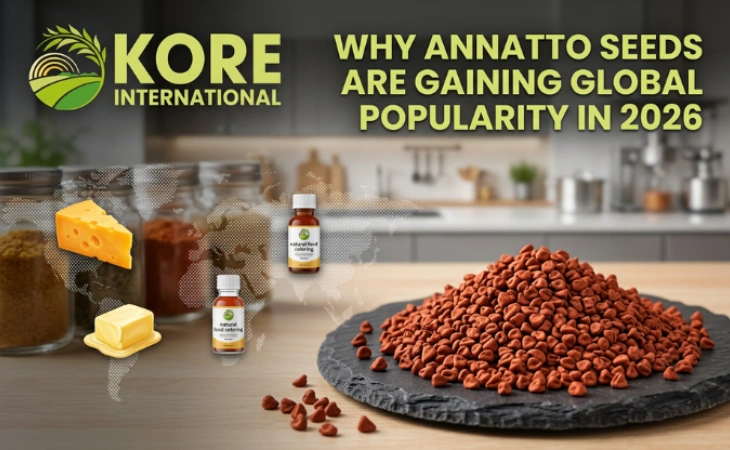
If you’ve noticed more packaged foods, cheeses, snacks, and even cosmetic products turning a warm, golden orange hue, there’s a good chance annatto seeds are behind that colour. In 2026, demand for annatto-with its natural, plant based, and relatively gentle profile-is rising sharply, and it’s starting to show up on ingredient lists far beyond its traditional uses in Latin American and Caribbean cooking.
This blog will walk you through why Annatto Seeds are becoming so popular worldwide, what makes them special, and how they fit into today’s clean label, sustainability driven food and beauty markets.
Over the past few years, consumers have become more cautious about synthetic food dyes such as Red 40, Yellow 5, and Yellow 6, especially in products for children and “health conscious” lines. In response, food brands are turning to natural colourants, and annatto seeds (from the Bixa orellana tree) have emerged as one of the most practical and versatile options.
Market data shows the global Annatto Seeds linked market was worth around $800–900 million in 2026, with projections to grow steadily at about 4–7% per year heading into the 2030s. This growth is driven by rising usage in dairy, snacks, beverages, bakery, cosmetics, and even pharmaceuticals, making annatto a quiet but powerful ingredient on the global stage.
Annatto seeds come from the red, spiky pods of the Bixa orellana shrub, commonly grown in tropical regions such as Peru, Brazil, and India. When the seeds are crushed or extracted, they release bixin and norbixin, carotenoid pigments that give foods a range of shades from yellow and orange to deep red, depending on concentration and processing.
Unlike synthetic dyes, annatto is perceived as “natural” and “plant based,” which fits perfectly with today’s consumer preference for shorter, more transparent ingredient lists. Global buyers and manufacturers are increasingly specifying Annatto Seeds or annatto based extracts instead of artificial colours, especially in products marketed as organic, clean label, or vegan.
Consumers and retailers are prioritizing clean label ingredients: no artificial colours, no synthetic additives, and ingredients with names people can understand. Annatto Seeds (often listed as “annatto extract” or “annatto colour”) are easy to defend on a label because they come from a real plant, not a lab made chemical.
Food and beverage brands are using annatto to replace synthetic yellows and reds in products such as cheese, yogurts, snack bars, sauces, and ready to eat meals, which helps them keep their products visually appealing while still meeting clean label expectations.
Annatto is approved as a food colourant in many regions, including the United States, European Union, China, and India, under codes such as INS 160b (E160b) and national additives lists. This wide regulatory acceptance makes it easier for global manufacturers to use annatto across multiple markets without constant reformulation.
While sensitivities to annatto exist in a small subset of people, its overall safety profile is better documented and perceived as milder than several synthetic dyes, which further supports its adoption by cautious brands.
With the rise of plant based and vegan lifestyles, brands need colouring agents that are not only natural but also compatible with vegan specifications. Annatto, being plant derived, checks both boxes.
It shows up in vegan cheeses, plant based yogurts, sauces, and ready meals, helping these products look rich and creamy without relying on animal based or synthetic colours.
Annatto based colourants come in several forms: oil soluble, water soluble, and emulsified variants, which makes them adaptable to different product types.
This versatility means a single Annatto Seeds supply chain can support multiple product categories, simplifying sourcing for large manufacturers.
Global food and cosmetic brands are under pressure to demonstrate sustainable and ethical sourcing. Annatto is increasingly being farmed using organic, fair trade, and environmentally friendly practices, particularly in Latin America and parts of Asia.
Reports indicate that around one quarter of commercial annatto products are already labelled as organic or fair trade, giving brands a clear “story” to highlight on their packaging and marketing materials. For a brand leader or a smaller producer aiming to build trust, anchoring your colour strategy on Annatto Seeds supports both regulatory compliance and sustainability claims.
In 2026, Annatto Seeds are no longer just a regional ingredient; they are a global workhorse of natural colouring. Here’s where you’re most likely to see them:
This broad application spectrum is one of the main reasons why the Annatto Seeds market is growing faster than many other single colour source ingredients.
Annatto has long been used in Latin American, Caribbean, and parts of South East Asian cuisines as a base for achiote paste, rice dishes, stews, and marinades. As global palates become more adventurous and ethnic cuisines gain popularity, consumers are exposed to these traditional dishes in restaurants, street food chains, and ready made meal kits, all of which may contain Annatto Seeds as a key ingredient.
At the same time, western food brands are experimenting with “global flavours”-think Mexican, Caribbean, and South American inspired products-where annatto’s colour and mild, slightly earthy flavour complement the overall profile. This cultural crossover is quietly expanding the base of consumers who not only accept annatto but actively expect it in certain products.
For food manufacturers, ingredient suppliers, and brand owners, Annatto Seeds are becoming a core part of the natural colour strategy, not just an occasional alternative. Using annatto can help you:
In 2026, many of the world’s largest food colour and ingredient companies are investing in annatto centric portfolios, R&D, and processing technologies, which signals that this is not a short term trend but a long term strategic shift.
While Annatto Seeds are gaining popularity, there are a few practical considerations you should keep in mind:
Smart brands are working with reliable Annatto Seeds suppliers and processing partners who can offer technical support, stable quality, and alternative formulations to navigate these challenges.
In 2026, Annatto Seeds are transitioning from a regional, traditional ingredient into a mainstream, globally traded commodity. With strong tailwinds from clean label movements, plant based diets, regulatory alignment, and sustainability expectations, annatto is well positioned to grow in both volume and strategic importance.
For you as a brand, product developer, or buyer, this means that understanding Annatto Seeds-what they are, how they work, and why they’re rising-is no longer just “nice to know”; it’s becoming essential in shaping flavour, colour, and trust in your products.
By embracing this natural, warm hued ingredient today, you’re not only staying ahead of trends-you’re building a product line that feels good, looks good, and aligns with the values that modern consumers care about the most.