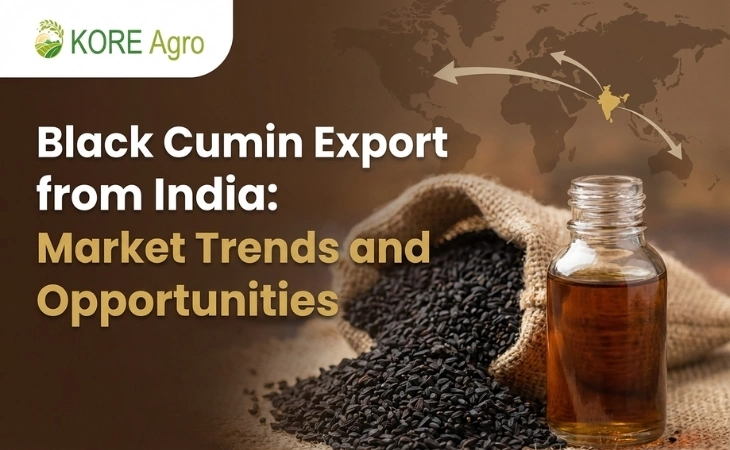
A single seed drives big trade - black cumin from India moves fast worldwide. Not just a kitchen staple, it draws attention for its sharp, earthy taste and natural compounds liked by wellness seekers. Growers across Gujarat and Rajasthan harvest crops that feed both spice racks and supplement bottles abroad. Buyers in Europe, North America, and the Gulf keep orders steady. What sets Indian batches apart is consistent oil content and careful handling after harvest. Some exporters win trust through third-party testing, others by locking long-term supply deals early. Shifts in climate affect yields now and then, yet demand keeps climbing. Packaging choices matter more than before - clean labels, clear origins. Middlemen who adapt to tighter standards stay ahead. The push isn’t only about volume but traceability from farm to shipment. One thing stands out: reputation grows slower than profits, yet lasts longer.
Spice shipments from India reached $4.72 billion during fiscal year 2024-25, led sharply by cumin types like black cumin. This particular segment made up a large slice of the $616.6 million market for cumin seeds, which holds nearly nine out of ten dollars traded worldwide. Lately, interest in black cumin has grown because people link it to well-being, pushing its worth beyond past levels of $50–80 million. Estimates now point toward exports hitting over $120 million within just a few years. Growth in lifestyle-focused industries, expanding at around 12% to 15% each year, keeps feeding this rise.
Something big happened between April and August of 2024. Cumin shipments jumped by sixty per cent compared to last year, hitting one hundred eleven thousand five hundred thirty-two tons. That batch brought in three hundred sixty-nine million dollars. At the same time, black cumin gained ground quietly. Tensions around Syria and Iran pushed competitors out of view. In Gujarat, nearly a quarter of India’s spice trade flows through its ports. When things get busy, Unjha APMC handles more than ten thousand sacks each day. Black seeds sell for higher, eight to twelve per cent above regular jeera. Why? They hold two point five to four per cent essential oil, plus almost perfect cleanliness at ninety-nine point five per cent pure. By 2024, base prices had climbed from earlier levels. Where they once ranged from two dollars four cents to six eighty per kilo, now they sit between two sixty-one and eight thirty-five
Top buyer of black cumin? China takes 18 per cent, spending $110 million yearly. Around 35,000 to 40,000 metric tons move there each year - used in traditional medicine formulas or shipped out again. That sharp anti-inflammatory trait makes Nigella a natural fit. Coming next is Bangladesh, with purchases totalling $64.9 million. Demand jumped by 73 per cent in 2024 alone. Local spice blends and quick meal kits are driving that surge.
Nowhere else in the Gulf does trade hum as it does here, $23.7 million flowing through UAE hands alone. From there, nearly half of what moves goes straight into kitchens in Saudi Arabia and Kuwait - spiced rice, flatbreads, always dusted with black cumin. Across oceans, American shelves stock it for wellness blends while Vietnamese labs turn it into medicine. Orders placed by Indians abroad lifted online sales sharply last year, a third higher than before. Buyers in Europe want their version certified clean, grown without chemicals, and packed for capsules or powders. Meanwhile, desert markets insist on untouched seeds - full weight, fully pure, just a trace of husk left behind. One town in India, Unjha, grows such potent batches that stores from Lisbon to Jakarta keep coming back.
Top-grade black cumin shipped abroad sticks to tight rules: nearly pure, between 99 and 99.5 per cent clean. Water levels stay under ten per cent across batches. Essential oils range from two and a half to four per cent, thymoquinone tucked inside at half to one and a half per cent. All leftover minerals after burning fall below eight per cent, with stubborn grit less than 1.2. Most of what moves - seventy out of every hundred parts - is whole seed, shaped like tiny droplets measuring three to five millimetres. The rest? Ground stuff, fine or coarse, meant for filling pill shells.
Farm certifications bring higher prices, about one-quarter more. Steam cleaning helps meet strict rules instead of using old methods. Machines in Gujarat pick out bad bits by colour, leaving almost nothing behind. Bags made of natural fibre hold twenty-five or fifty kilograms, lined inside, with air removal possible. Every box moving across borders gets a unique ID number for checking where it goes.
From Unjha to Patan in Gujarat, alongside Jodhpur and Barmer in Rajasthan, comes nearly all of India's cumin output - light soil types favouring the darker variety. Planted during autumn months, crops emerge again come winter's end, swelling market yards. When conflict stirred across Syria and Turkey last year, exports jumped by more than half within three months compared to prior quarters.
Fresh off the back of Sortex facilities, Unjha cuts transport costs by a fifth thanks to its proximity to Mundra port. While Rajasthan pushes volume-ready, machine-processed stock, it’s Gujarat that holds the upper hand on high-end organic lines.
From labs to shelves, thymoquinone grabs attention with talk of shielding cells, boosting defence systems, followed by interest in fighting rogue cells - now tucked into pills and steeped in herbal drinks. Meanwhile, black seed oil finds a surge overseas, especially in skincare lines, up a quarter in export numbers lately.
Folks want simpler labels now - organic sales jumped by one-fifth. Meeting EU rules means pesticide levels must stay under 0.01 milligrams per kilogram.
Got more profit from powdered forms. Ready-made mixes using turmeric bring higher returns - about 30 to 40 per cent. That extra step in processing pays off.
Far from steady, the regional balance shifts as competitors stumble - India claims nearly all of that market space. Outcomes tilt unexpectedly when old tensions resurface elsewhere.
Online trade jumps - Indian suppliers on IndiaMart and Amazon see business rise by 40%. Meanwhile, overseas buyers are snapping up goods straight from local sellers at much higher rates.
Rainy seasons push crop output up or down by nearly a fifth. Contracts agreed ahead of time fix the price regardless.
Some shipments get turned away - five out of every hundred have too much ethylene oxide. A steam cleaning step fixes the problem before it moves forward.
Fresh pressure arrives when Turkish and Emirati shipments flow back into markets - ten per cent cheaper, give or take. High-grade materials hold their ground, though, simply because they perform better under stress.
Now shipping costs climb by two hundred dollars per tonne. Because containers are stuck elsewhere. Still, spreading through Mundra eases some strain. Fewer delays pop up now there.
Spices Board labs help reduce risk by testing quality early. Instead of waiting, blockchain keeps track step by step. Insurance from APEDA steps in when things go wrong.
Start here. Get the APEDA RCMC, costing five thousand rupees. That takes about a week. Alongside it, secure your IEC code. Also, complete GST registration at the same time. Each step runs in parallel. Nothing waits on another.
Get your supply from Unjha - prices range between two hundred fifty and three hundred fifty rupees per kilogram, factory exit rate.
Third comes lab checks for heat level plus toxin levels under five parts per billion.
Next up, load 25kg into a jute sack - price ranges from $3.5 to $5 per kg when shipped from Mundra port. That part comes with basic freight terms included.
Now comes step five - handling LC payments. A 20-foot container can carry up to 18 metric tons.
Starts at ₹300 per kg when bought, then add ₹50 more for shipping and handling - totals ₹350 per kg on board. The sale price lands at $4.5 per kg delivered, turning into ₹375 each kilo brought in. From one 18-tonne load, the gain hits ₹4.5 lakh, sitting near a fifth of the total value.
One forecast sees black cumin moving close to cumin’s projected $700 million mark by fiscal year 2025. A separate estimate suggests it could reach $150 million on its own by 2030, growing at 14 per cent each year. Rising interest in wellness is helping drive demand. Shortages in global supply are opening space for new players. Gujarat’s transport and processing networks give Indian producers a working advantage. Strength in logistics makes scaling easier than before
Right here, right now - grab those Kharif deals before they slip. Get the organic stamp moving, fast. Eyes on China, then Bangladesh - they’re heating up. Black cumin from India could be yours if you move sharp. The chance isn’t waiting.